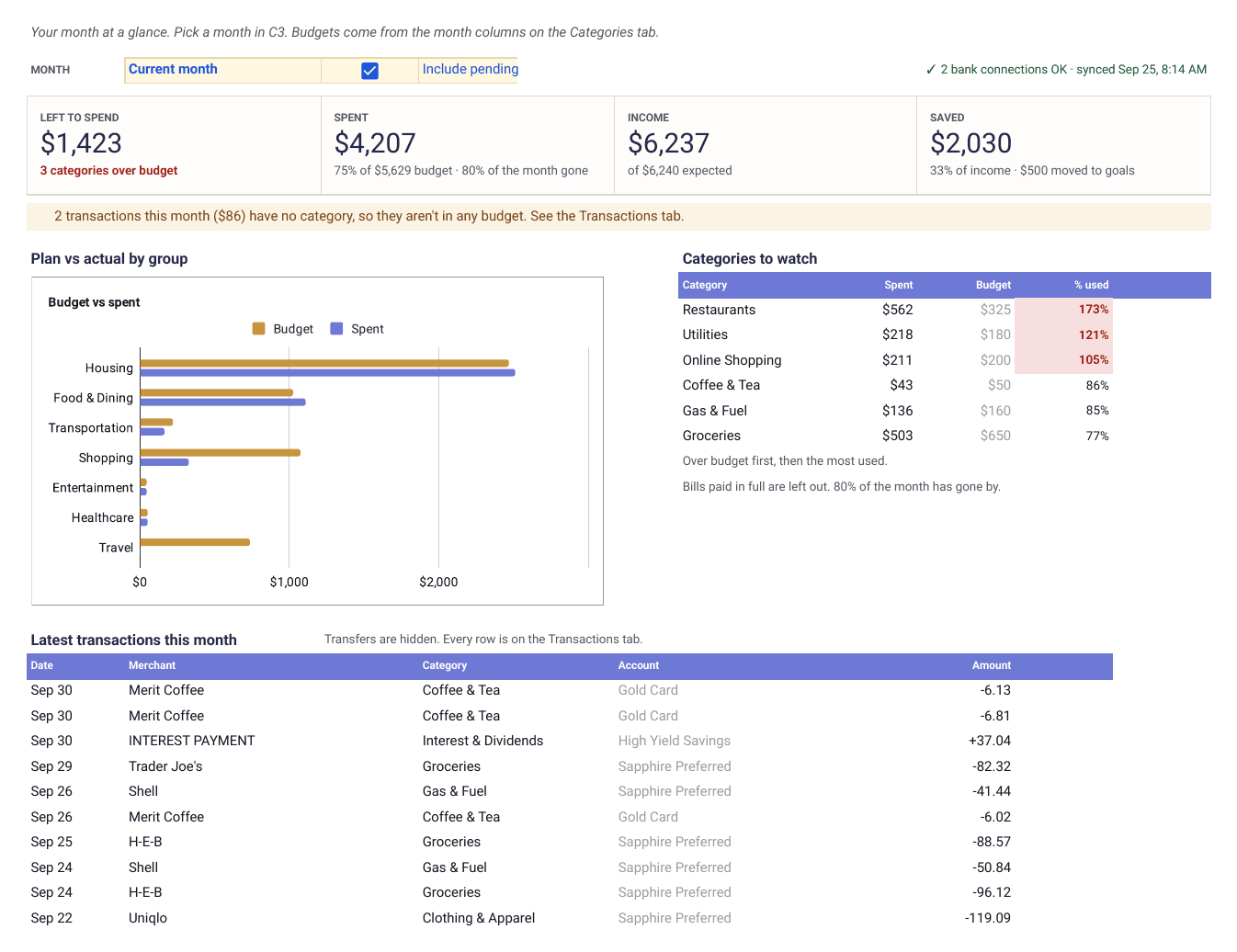
Google Sheets Budget Template (Free Download) + Auto-Sync Your Financial Data
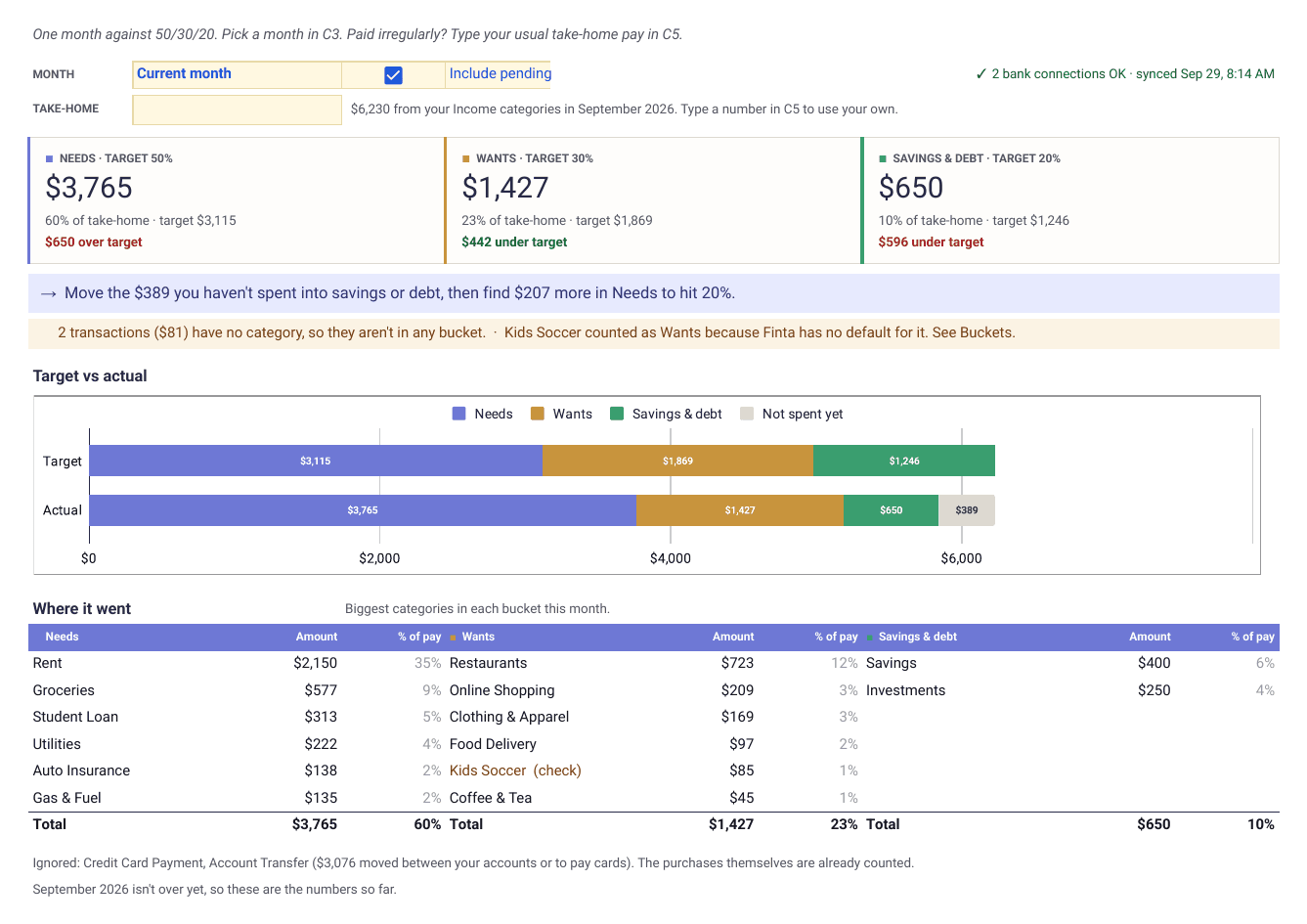
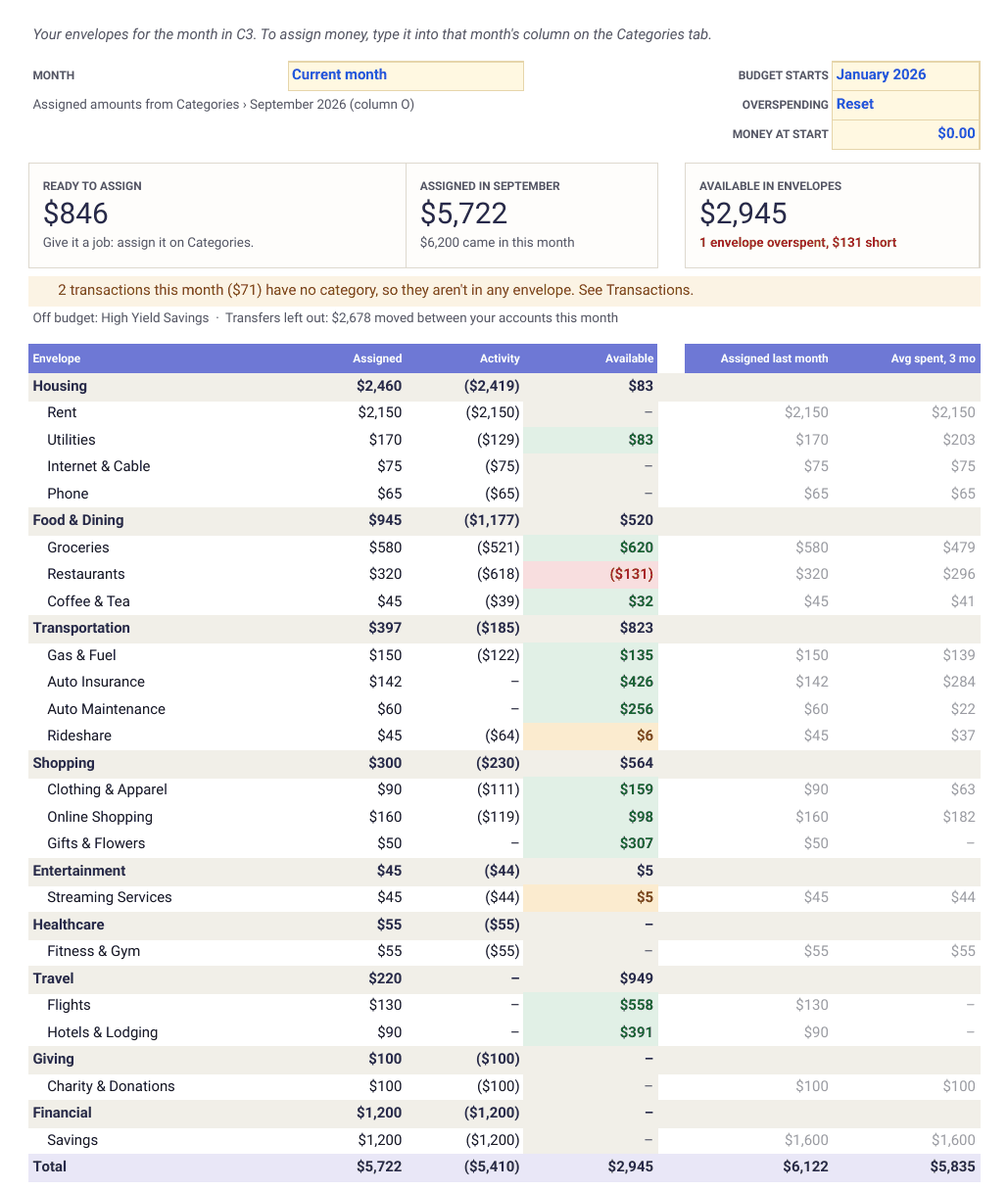
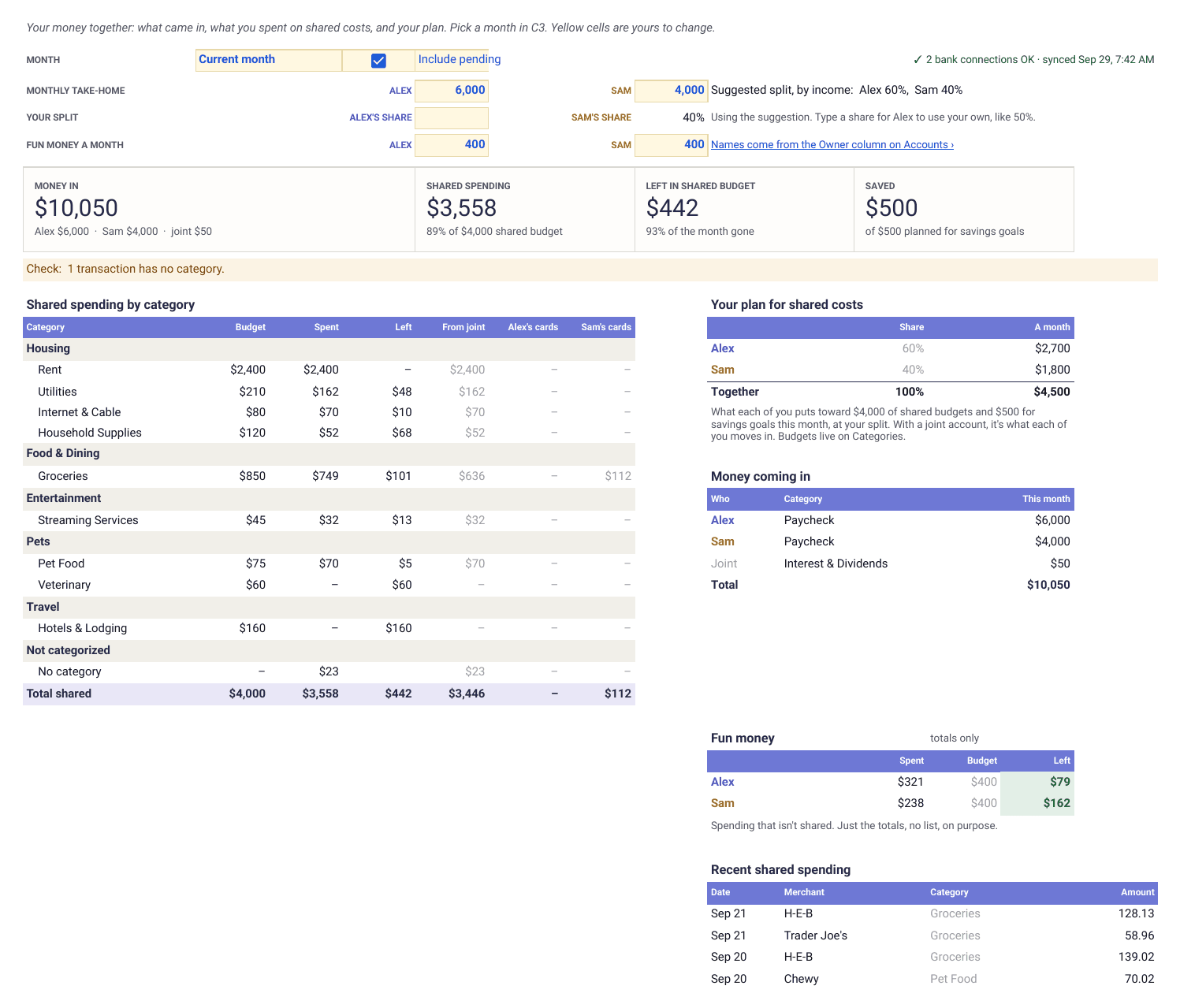
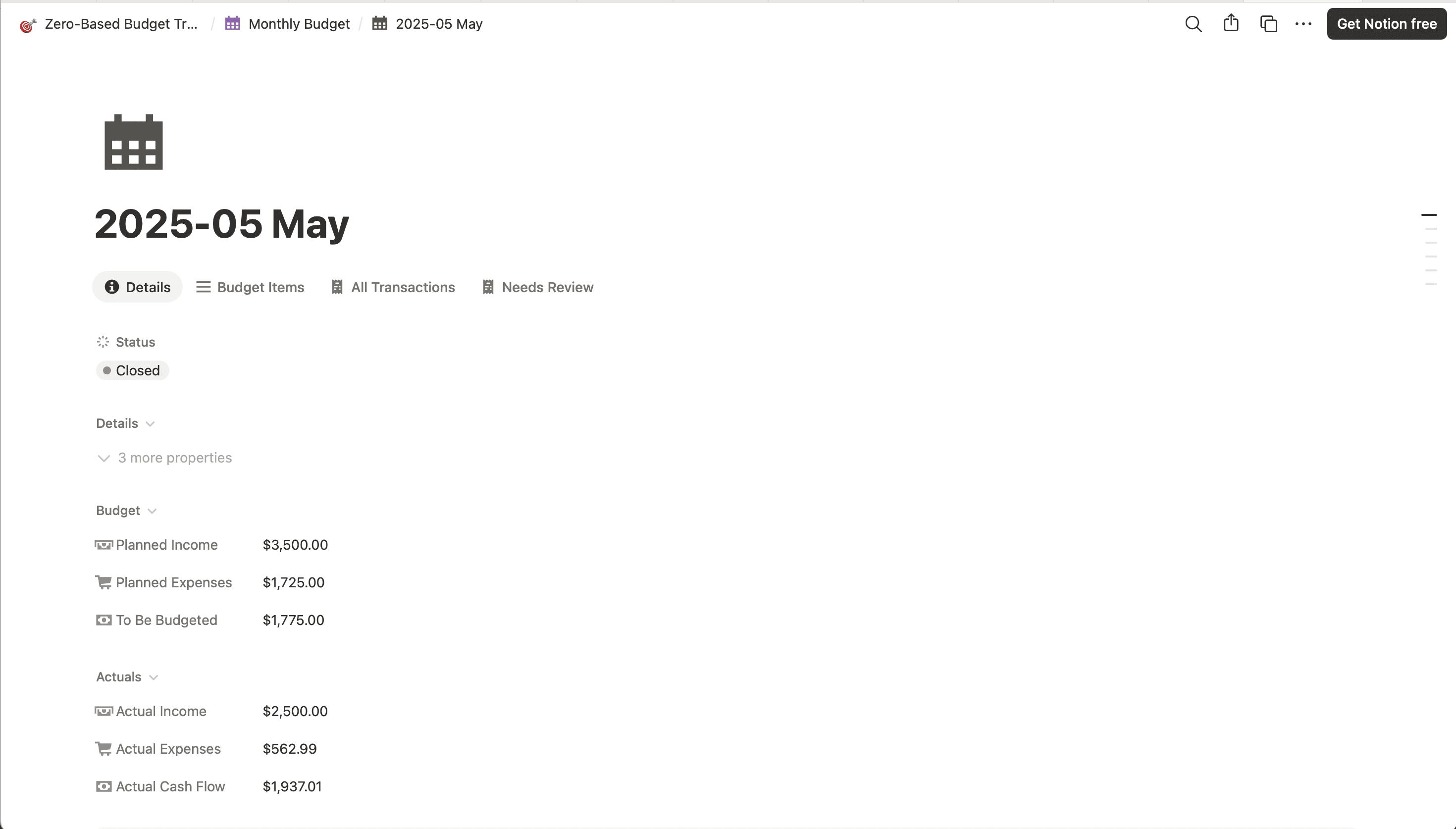
A free, ready-to-use budget spreadsheet for 2026. Download it, make a copy, and start tracking your income and spending right away. You can enter transactions manually or connect your bank accounts through Finta to pull them in automatically.
What's Included in This Budget Template
How to Use the Google Sheets Budget Template
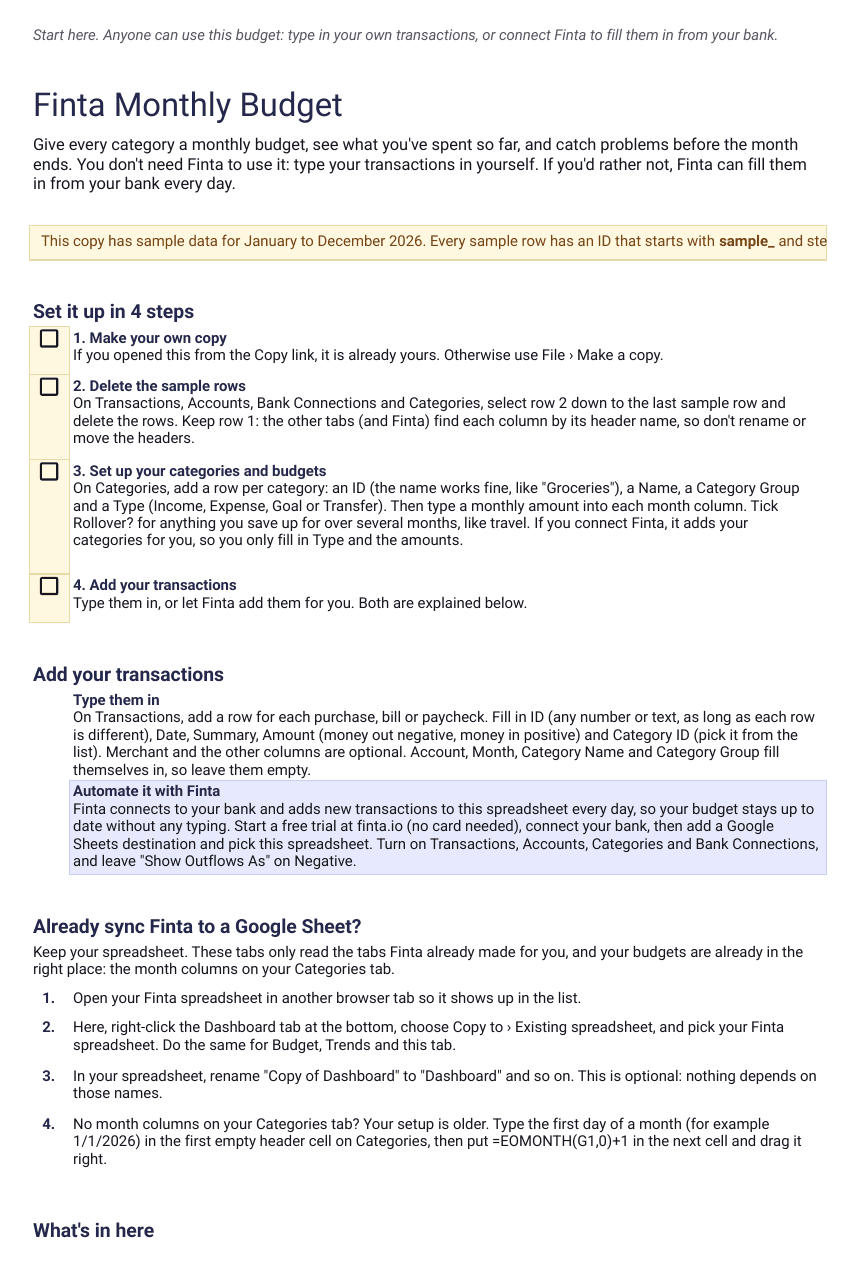
Getting started with your budget template is simple. Choose between manual tracking or automated sync based on your preferences:
1 Download the Template
Click the download button to get your free Google Sheets budget template. The template opens directly in Google Sheets where you can make a copy to your own Google Drive.
2 Set Your Budget Categories
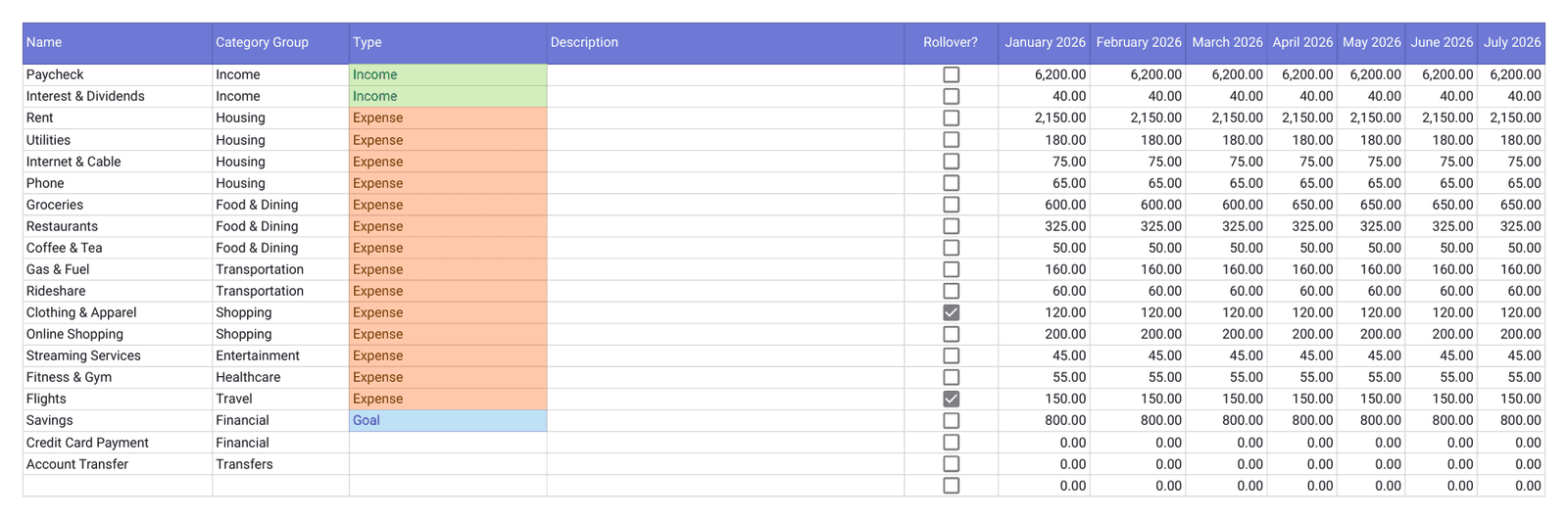
Review and customize the pre-built expense categories to match your spending habits. Common categories include:
- Housing (rent, mortgage, utilities)
- Food & Dining (groceries, restaurants)
- Transportation (gas, insurance, maintenance)
- Entertainment & Recreation
- Savings & Investments
3 Enter Your Income
Add your monthly income sources in the Budget Planning sheet. Include your primary salary, side income, and any other regular income streams.
4 Track Your Progress
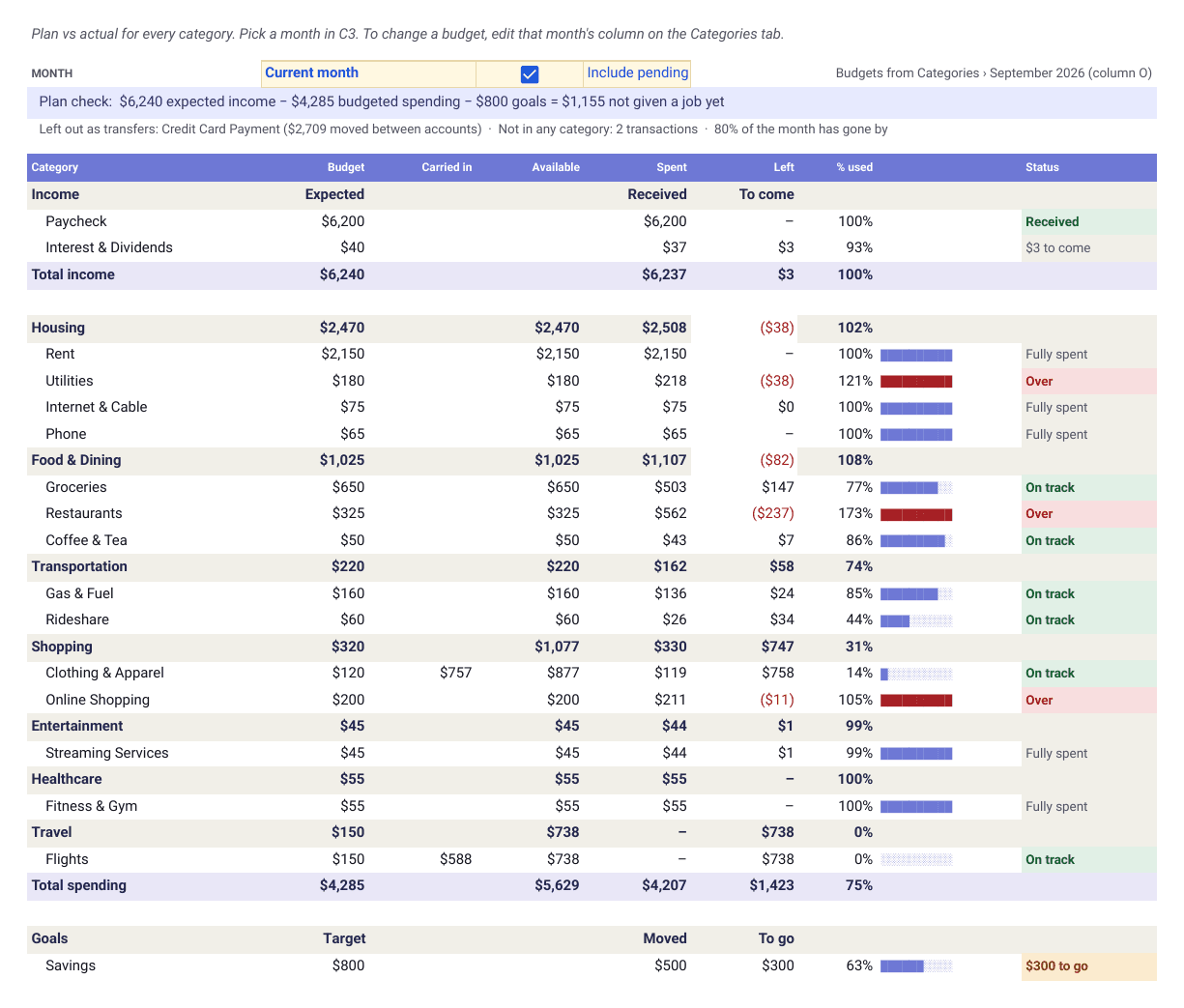
Use the Budget Tracking sheet to monitor your actual spending against your planned budget. Visual indicators show when you're on track or approaching your limits.
Manual vs Automated Budget Tracking
📝 Manual Tracking
🤖 Automated with Finta
Setting Up Your Budget Categories
Effective budgeting starts with the right categories. Our template includes proven categories that work for most people:
Essential Expenses (50-60% of income)
- Housing: Rent or mortgage, property tax, utilities, renters/homeowners insurance
- Food: Groceries, meal kits, dining out, coffee shops
- Transportation: Gas, car payment, insurance, maintenance, parking, transit passes
- Healthcare: Insurance premiums, medications, doctor visits, dental, vision
- Subscriptions & Utilities: Phone, internet, cloud storage, streaming services
Financial Goals (20% of income)
- Emergency Fund: Build to 3-6 months of expenses
- Retirement: 401k, IRA, Roth IRA contributions
- Debt Payoff: Credit cards, student loans, personal loans
- Savings Goals: Vacation, home down payment, large purchases
Lifestyle & Discretionary (20-30% of income)
- Entertainment: Concerts, hobbies, gaming
- Personal Care: Haircuts, gym memberships, wellness apps
- Shopping: Clothing, household items, online orders
- Delivery & Convenience: Food delivery, ride-sharing, convenience subscriptions
- Miscellaneous: Gifts, donations, unexpected expenses
💡 Pro Tip
Start with broader categories and get more specific as you use the template. It's easier to combine categories later than to split overly detailed ones.
Connecting Real Financial Data with Finta
Transform your Google Sheets budget from manual tracking to automated precision:
Automatic Transaction Import
Your bank transactions sync seamlessly to the Transactions sheet, eliminating manual data entry and ensuring you never miss a purchase.
Smart Categorization
Set up rules to automatically categorize recurring transactions. Your morning coffee goes to "Food & Dining," rent goes to "Housing," and gym membership goes to "Personal Care."
Real-Time Balance Updates
Account balances update throughout the day, giving you an accurate financial picture whenever you check your budget.
Multi-Account Support
Connect checking accounts, savings accounts, credit cards, and even investment accounts into one unified budget view.
Ready to automate your budget? Connect your accounts with Finta and start syncing your financial data automatically.Advanced Budget Analysis Features
Visual Progress Tracking
The Budget Tracking sheet includes visual progress indicators that show:
- Green: On track with spending
- Yellow: Approaching budget limit (80%+)
- Red: Over budget - time to adjust
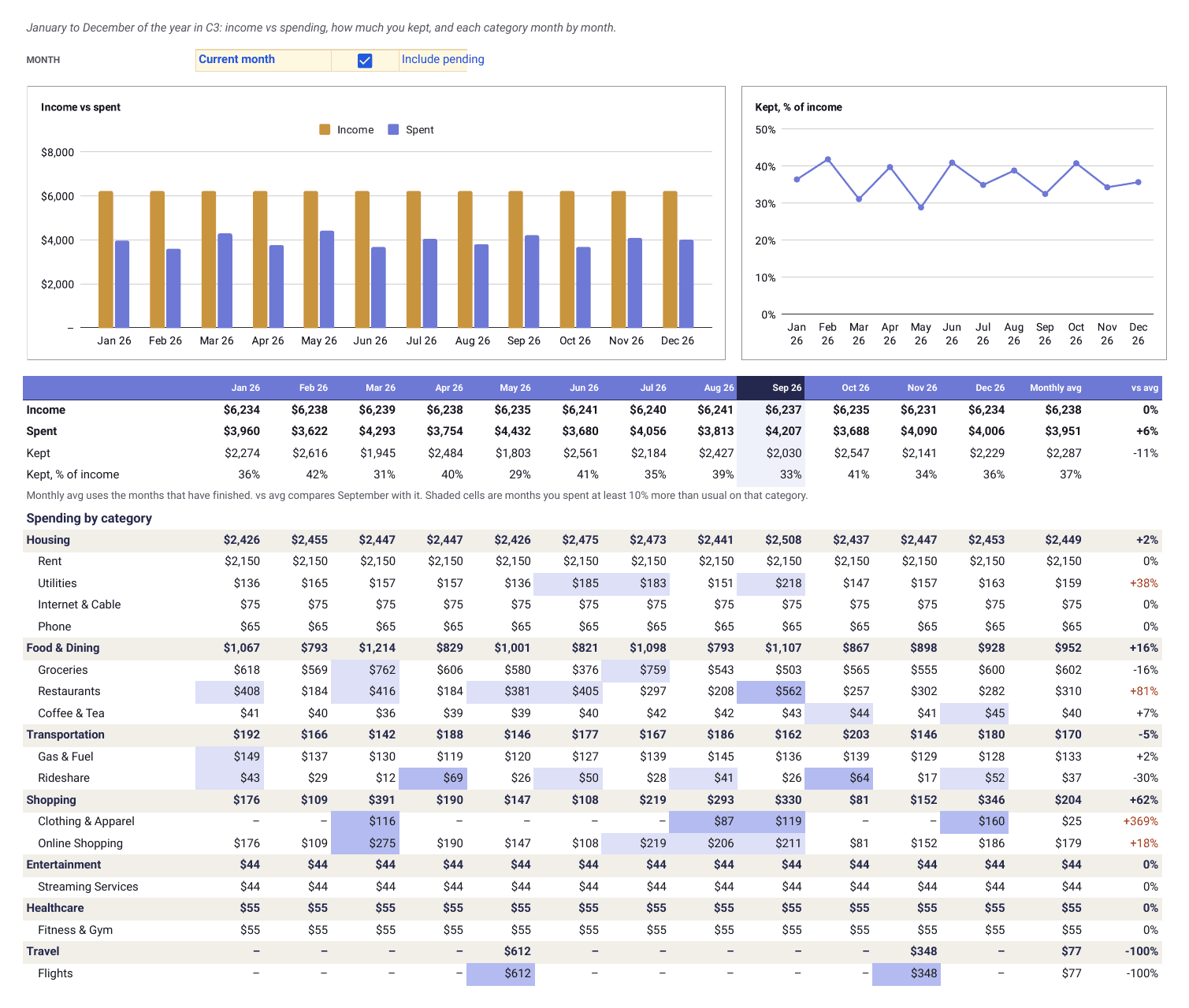
Spending Trend Analysis
Track your spending patterns over time to identify:
- Seasonal spending variations
- Category trends (are you spending more on dining out?)
- Progress toward financial goals
- Areas where you consistently over or under-budget
Income vs Expense Flow
The Budget Planning sheet calculates:
- Total monthly income from all sources
- Total budgeted expenses
- Remaining amount for savings or debt payoff
- Percentage of income allocated to each category
Monthly Budget Review Process
Make your budget a living document with regular reviews:
1 Week 1: Quick Check-In
Review your spending in each category. Are you on track? Any surprises?
2 Week 2: Mid-Month Adjustment
If you're overspending in one category, reallocate funds from another category or adjust your habits.
3 Week 3: Goal Progress
Check progress on savings goals and debt payoff targets. Celebrate wins!
4 Month End: Full Review
Compare actual vs budgeted spending. Plan improvements for next month.
Customizing the Template for Your Needs
Personal Budget Customization
- Add categories specific to your lifestyle
- Adjust budget percentages based on your income
- Create savings goals for upcoming purchases
- Track debt payoff progress
Family Budget Features
- Multiple income sources for partners
- Child-related expense categories
- Family goal tracking
- Shared Google Sheets access for real-time collaboration
Small Business Adaptation
- Separate business income and personal income
- Business expense categories
- Tax-related expense tracking
- Cash flow monitoring
Frequently Asked Questions
How do I create a budget template in Google Sheets?
Download the free template above, open it in Google Sheets, and click "Make a copy." From there, adjust the categories to match how you actually spend, enter your income, and start tracking. If you want transactions pulled in automatically, connect your bank through Finta.
What should a budget spreadsheet include?
At minimum: income sources, expense categories, a planned vs actual comparison, and a monthly summary. This template also includes account balance tracking, visual progress indicators, and spending trend charts.
How do you automate a budget in Google Sheets?
Connect your bank accounts through Finta. Your transactions and balances sync directly into the spreadsheet, so you skip manual data entry and spend your time reviewing the numbers instead of typing them in.
Is there a free Google Sheets budget template?
Yes. This template is free to download with no signup. It includes a dashboard, monthly tracking sheets, customizable categories, and optional bank sync through Finta.
Can I share this budget template with my family?
Yes. Google Sheets supports real-time collaboration, so multiple people can view and edit the same budget. Set sharing permissions to control who can make changes.
Does the template work on mobile devices?
Yes. You can view and edit the template through the Google Sheets app on iOS and Android.
How often should I update my budget?
If you enter transactions manually, once a week keeps things manageable. With Finta, transactions sync automatically, so a monthly review is usually enough.
Can I use this template for business budgeting?
It's designed for personal finance, but you can adapt it for a small business by swapping in business expense categories and adding revenue tracking.
Download the template, make a copy, and start budgeting in minutes.
Take Your Budget Further
Ready to eliminate manual data entry? Connect your budget template to real financial data:
- Sync Bank of America to Google Sheets - Automatically import transactions from your Bank of America accounts
- Sync Chase to Google Sheets - Connect your Chase bank accounts for real-time data sync
- Sync Wells Fargo to Google Sheets - Import transactions from your Wells Fargo accounts automatically
- How to Sync Bank Accounts to Google Sheets - Step-by-step guide to connecting your bank accounts automatically
- Complete Google Sheets Integration Guide - Learn how to connect any bank account to Google Sheets
Skip the manual data entry. Connect your bank accounts and let your budget update itself.